Safeguard was a direct descendent of the earlier Sentinel ABM system. Sentinel was to have been widely deployed to protect
major population centers, but its ultimate implementation as Safeguard changed its goal to a more limited defense of the
Minuteman ICBM retaliatory capability.
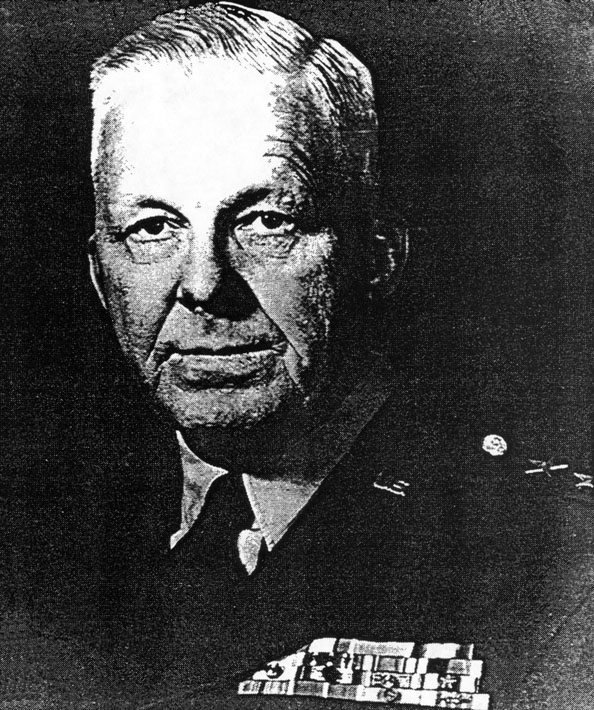
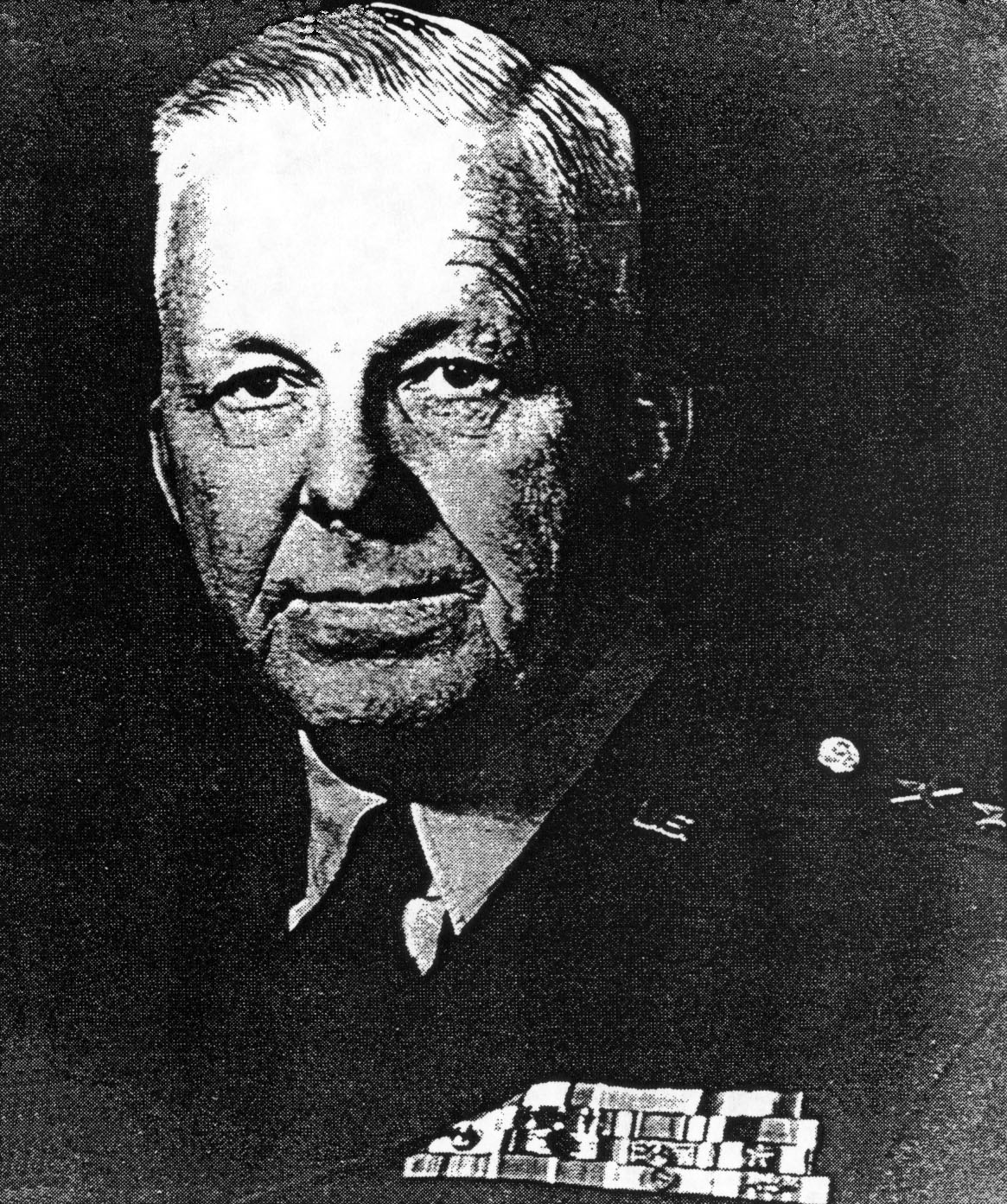
The only operational Safeguard complex was named for Lieutenant General Stanley Raymond Mickelsen, former commanding
general (1952-1957) of the U.S. Army Air Defense Command. He is recognized as a visionary leader who brought the army's
air defense artillery from the era of guns into the age of missiles.
Initial operational capability (IOC) was achieved shortly after the scheduled date of 1 April 1975, with a less-than-full
complement of defensive missiles installed in their launch cells and 24x7 system operation underway. Full operational
status with a total of 30 Spartan and 70 Sprint missiles was achieved on 1 October 1975. (The 1972 SALT I ABM treaty with
the Soviet Union limited each country to 100 ABM launchers.)
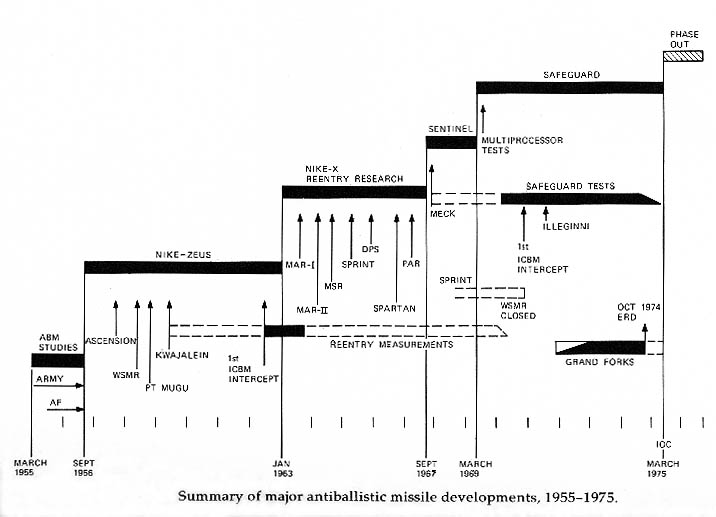
Even though it represented the fruition of two decades of missile defense research and development (
chart), Congress voted on 2 October 1975 to deactivate the system. Ironically, this vote
occurred one day after the site had achieved full operational status. Tactical operation was terminated in November 1975,
approximately eight months after reaching IOC. De-commissioning officially began on 10 February 1976.
The performance of the system during its limited period of operation is summed up in
A History of Engineering and
Science in the Bell System; National Service in War and Peace:
The performance of the tactical Safeguard system installed at Grand Forks showed amazing reliability for such a complex
system. Starting in April 1975 when the system became operational and continuing through November 1975, the system was in
service 7 days a week and 24 hours a day, except for short periods of planned shutdown for modifications in capability. During
this period the system was under Army control with routine maintenance carried out by Western Electric personnel. The
system availability figure for this period was over 99.5 percent, which was determined by simulated inputs to test the
operational capability.
The only part of the original installation still in use is the Perimeter Acquisition Radar (PAR) which the U.S. Air Force
operates as part of its space track and early warning system. The inactivated Safeguard facilities have been de-commissioned
(all tactical systems removed) and
were maintained in caretaker status by the U.S. Army Space and
Missile Defense Command (SMDC) until the U.S. withdrew from the ABM treaty in 2002. The MSR complex tactical area is now owned
by Cavalier County with plans for redevelopment. The other parts of the MSR complex and the four remote Sprint launch sites
(RSL's) have been sold to private owners. <$
Additional introductory information:
-
These links are available back on the main "Introduction" page:
-
The System Overview section explains how the system accomplished its mission.
-
The Maps section provides component locations in North Dakota.
-
The Engagement Walkthrough section illustrates a simplified Safeguard engagement.
-
Introductory Videos (all open in a new window): <$
-
Safeguard Missile Program
6:03 YouTube
-
The Safeguard ABM System
5:28 YouTube
-
Abandoned Nuclear Antiballistic Missile Base
7:09 YouTube
-
MSR Complex Aerial Tour
4:04 YouTube
-
USASMDC Fact Sheet
-
The following excerpts from the Historic American Engineering Record (HAER) documents about the SRMSC provide extensive
and detailed introductory information: